Why Soft Skills Matter in Today’s Job Market
What Are Soft Skills?
A strong academic background is crucial to securing a career in your chosen field, but not every skill can be taught in a classroom.
Soft skills (also known as people skills or interpersonal skills) are the personal abilities you use to interact with others. In a workplace context, that means how you communicate, collaborate and navigate relationships with colleagues every day.
Unlike technical skills, soft skills are difficult to measure – but employers consistently seek them out in graduates, and they can make all the difference between landing a role and losing it to someone equally qualified.
Read on to learn how improving your soft skills can strengthen your prospects after graduating from BSBI.
Soft Skills vs Hard Skills: Key Differences
So, what’s the difference between soft skills and hard skills?
Soft skills are the interpersonal abilities we use every day to navigate challenges, build relationships and work effectively with others.
Hard skills, on the other hand, are role-specific technical abilities learned through formal training or study – such as proficiency in a programming language, financial modelling or playing a musical instrument – and are often tested through a university programme or course.
Whereas hard skills require structured practice and assessment, soft skills develop more organically – through experience, observation and the everyday business of working with people.
What are the Top 8 Soft Skills You Need?
Soft skills can be developed during your studies at BSBI, such as in STEM programmes.
To make yourself as appealing as possible for a job role, the following soft skills are the areas generally seen as most important (and widely applicable).
1. Communication Skills
Being able to speak, read and write effectively is crucial to virtually any job in any sector. If you can’t speak with a customer, or write an email to a colleague, then your value as an employee will be severely impacted.
You can improve your communication skills by actively listening, being empathetic and being assertive when interacting with colleagues (or anyone).
Being able to express your ideas effectively is also a key attribute for virtually any job.
2. Teamwork and Collaboration
If you can’t work well within a team, then you’re not much use to many companies out there.
Team projects require people to be able to work effectively together, overcome disputes and challenges when they arise, and find common ground when working towards a solution.
From business programmes to technology-related degrees, teamwork is an essential soft skill that a lot of students often underestimate. If you’re easy to work with and can adapt to overcome personality differences, you’re automatically a more appealing candidate for a role.
3. Adaptability and Flexibility
There’s no such thing as a perfect job. Sooner or later, problems arise – and being adaptable and flexible to issues is essential to the smooth running of a workplace.
Sometimes, you have to change direction, alter your usual plans to complete a project, meet a deadline that has been brought forward, or work on something else entirely just because your line manager asks you to.
If you’re open to this and prepared for such changes as and when they happen, you’ll be seen as a resilient and reliable candidate for practically any job role.
4. Leadership
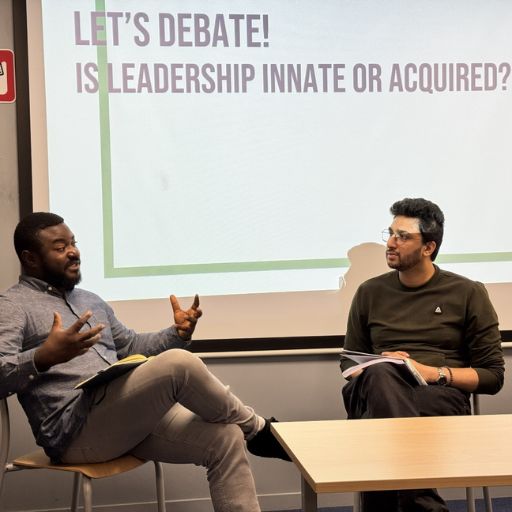
Some people are born leaders. Others are not.
If you have natural leadership abilities, that’s great, but some leadership skills need to be learned over time and through experience. If you can become a better leader, you’ll be more effective at inspiring others and motivating them to reach their goals.
This, over time, will lead to you building stronger relationships with colleagues, and make you a more effective, well-rounded employee.
“People skills in leadership are not negotiable”.
Cristina Imre
Entrepreneur and Former CEO of Aecho
5. Problem-solving
Problems can arise in any job role. With experience, you can learn to adapt and overcome problems, whether by teamwork or individual application. Creativity and critical thinking skills are essential to helping you improve your problem-solving abilities.
If you can think outside the box and look at problems from a different perspective, you will be a valuable asset to any company or organisation.
6. Critical Thinking
This is related to problem solving, and demonstrates your adaptability as a person, and as an employee. Being able to suggest new theories and solutions to problems is an underrated skill that any employer will value highly.
7. Time Management
Being able to prioritise your workload, meet deadlines effectively and balance your time effectively is crucial to your success rate in a job (hospitality and tourism management industry is one such example).
If you struggle with your time management skills, consider writing priority lists to keep track of your tasks, or use AI software or content management systems to keep on top of your projects and deadlines.
Time management is an essential soft skill as a student (meeting coursework deadlines, revising for exams), and it’s no different in the workplace.
8. Emotional Intelligence
People who are emotionally intelligent can identify, understand and manage their internal emotions without overreacting.
If you can develop your empathy, self-awareness and social awareness, then you’ll be seen as someone with high levels of emotional intelligence and be a more appealing prospect for an employer.
“In a high-IQ job pool, soft skills like discipline, drive and empathy mark those who emerge as outstanding”.
Daniel Goleman
U.S. Psychologist, Author and Science Journalist
Importance of Soft Skills in Today’s Job Market
Today’s job market demands various different soft skills in order to succeed.
The following are specific soft skill areas that you need to be able to demonstrate to ensure a fulfilling career.
- Adapting to Changing Workforce Trends
The world of work looks different to how it did even five years ago. Roles are evolving, industries are shifting, and the skills that got someone hired a decade ago might not be enough today.
What remains constant is the need for people who can read a room, respond to change, and keep moving when the ground shifts beneath them. Soft skills make that possible.
- Thriving in a Global Job Market
Today’s graduates aren’t just competing locally, they’re contending against each other on an international stage. Whether you’re graduating with a Global MBA or any other degree, you need to gain every possible edge to get to the top.
Working alongside colleagues from different countries, cultures, and professional backgrounds is becoming the standard.
Strong communication, empathy and adaptability are what allow you to build real working relationships across those differences. Remember it like this – technical ability gets you in the room (your postgraduate degree, for example). Soft skills are what keep you there.
- Building a Positive Workplace Culture
Workplace culture isn’t built by policy documents, it’s built by people.
Employees who communicate openly, listen well and treat colleagues with respect are the ones who shape environments where others actually want to work. Employers know this, which is why soft skills are increasingly part of how candidates are assessed – not just at interview stage, but throughout their careers.
- Driving Measurable Business Impact
Soft skills aren’t just ‘nice to have’. They directly affect results.
Teams that work well together solve problems faster. Leaders who communicate clearly reduce mistakes. Employees with strong emotional intelligence handle client relationships more effectively.
Rather than as an optional extra, think of soft skills as the foundation for a workplace that collaborates effectively and gets the job done on time, with as minimal disruption as possible.
- Enhancing Creativity and Problem-Solving
Some of the most valuable moments in any workplace happen when someone looks at a problem differently. Critical thinking, creativity and the willingness to challenge assumptions are soft skills that directly influence the quality of decisions a team makes. These aren’t things automation can replicate – they’re uniquely human and increasingly sought after by workplaces.
- Leadership Development and Growth
Not every graduate walks into a leadership role on day one, but the soft skills that make a good leader can be developed long before that title arrives.
Self-awareness, the ability to motivate others, clear communication under pressure: these are the qualities that set careers on an upward trajectory.
Remember – employers aren’t just hiring for the role in front of them. They’re looking for potential.
- Soft Skills in Remote & Hybrid Work
Remote and hybrid working has made soft skills more visible, not less important.
When you’re not sharing a physical space with your team, the ability to communicate clearly, manage your own time and maintain trust across distance becomes essential.
Collaboration doesn’t happen by accident – it takes effort, self-discipline and emotional intelligence to sustain it.
- Human Skills in the Age of AI & Automation
Automation is reshaping many industries. Some tasks that once required human input are increasingly being handled by technology.
What can’t be automated, however, is human judgement, empathy, and creativity. As AI takes on more routine tasks, the skills that make us uniquely human, the ability to connect, adapt and think critically become more valuable, not less.
Soft skills are, in many ways, the future-proof part of your skill set.
“Soft skills are taken for granted — they are mostly intangible and not tangible technical stuff that you can pick up from a specific course or qualification. Paradoxically it’s also soft skills that are the most valuable and transferable.”
Binod Shankar
Executive Coach and Keynote Speaker
How to Improve Your Soft Skills?
Even though soft skills can be acquired and developed over time, that doesn’t mean you should leave it all to chance.
There are several ways in which you can develop your soft skills and push yourself ahead of other candidates competing for the same job role.
- Practice Effective Communication
The more we communicate, the better we become at it.
Look for opportunities to speak up in seminars, lead group discussions, or present your ideas to others. You could even consider joining the Debate Club at BSBI to really crystallise your skills and put them to the test.
Writing matters just as much, so pay attention to how you structure emails, reports and written submissions. The more intentionally you practice, the more natural it becomes.
- Seek Feedback and Self-Improvement
Sometimes, honest feedback can hurt, but it’s how we grow.
Talk to tutors, peers or managers about how you come across in group settings, how you handle pressure, or where your communication could be sharper.
The end goal isn’t to take every comment personally – it’s to build a clearer picture of where you are and where you want to be.
- Engage in Team Activities
Teamwork is a skill, and like any skill, it gets better with practice.
Throw yourself into group projects, student societies, sports teams or volunteer work – anywhere that requires you to collaborate, negotiate and occasionally disagree constructively.
BSBI has an excellent range of clubs and societies you can join – from Arts Club to Sport Club, Travel Club and more.
- Take Courses and Training Programmes
Structured learning can accelerate soft skill development in ways that experience alone sometimes can’t.
Look for courses in communication, leadership or emotional intelligence – many are available online and can fit around your studies.
At BSBI, programmes are designed to build both technical knowledge and the interpersonal skills that employers actually ask about in interviews.
- Gain Real-World Experience
There’s nothing quite like doing something yourself.
Internships, part-time work, placements and volunteering all expose you to environments where soft skills are tested daily – and where you’ll develop them faster than any classroom exercise can replicate.
Every professional interaction is an opportunity to learn something about how you work with others.
Common Mistakes to Avoid While Developing Soft Skills
Now you know how to develop your soft skills, it’s important to also know what not to do.
Take note of these red flags to ensure your soft skills development goes smoothly.
- Ignoring Feedback
Feedback is only useful if you act on it.
When someone takes the time to tell you how you’re coming across, treat it as data. You don’t have to agree with every comment, but dismissing feedback entirely is one of the quickest ways to stall your own development.
- Lack of Self-Awareness
You can’t improve what you don’t acknowledge. Many people overestimate how well they communicate, collaborate or handle pressure – and that gap between self-perception and reality is where soft skill development stalls.
Take some time to reflect honestly on how you perform in group settings, under stress, or in difficult conversations.
Journalling, peer feedback and mentorship are all useful tools here.
- Poor Listening Skills
Communication is a two-way process, but listening is the half that most people underinvest in. Waiting for your turn to speak isn’t the same as actually hearing what someone is saying.
Active listening (paying full attention, asking clarifying questions), and responding to what was actually said rather than what you expected to hear is a skill in its own right, and one that employers notice quickly.
- Inconsistent Practice
Soft skills can deteriorate over time if you don’t practice them. Committing to a workshop or course and then reverting to old habits won’t produce lasting change.
The people who develop strong soft skills are the ones who practice them consistently.
Small, repeated efforts compound over time far more effectively than occasional bursts of focused development.
What are the Soft Skills that Employers Look for in Graduates?
A strong degree tells an employer what you know. How you perform in the room tells them who you are to work with. For graduates entering competitive job markets, soft skills are often what separates two candidates with identical academic profiles.
Communication ranks at the top – not just speaking confidently, but listening well, writing clearly and adapting to your audience.
Teamwork isn’t far behind. Most roles involve working across departments, time zones and sometimes languages, and employers want to see you can contribute, manage disagreement and keep things moving.
Adaptability, problem-solving, critical thinking and emotional intelligence complete the picture. The ability to absorb change, find solutions independently and manage your own reactions under pressure signals genuine readiness for professional life – and it shows up long before any formal review.
At BSBI, these skills are built into the learning experience from day one – so by the time you graduate, you’re not just qualified. You’re ready.
Conclusion
Qualifications open doors. Soft skills determine what happens once you walk through them.
The job market rewards people who communicate clearly, adapt under pressure and think critically when it counts. These aren’t extras, they’re expectations. And every one of them can be developed and strengthened over time.
The earlier you start, the better placed you’ll be. The habits you build now – how you listen, respond to feedback and show up in a team – will shape how employers see you for years to come.
At BSBI, you don’t have to figure that out alone. Our programmes are designed to build both the academic knowledge and real-world skills that today’s employers ask for – giving you the confidence to go beyond limits.