Top Digital Economy Project Ideas and Essential Skills Every Student Must Know
Introduction
We are living through one of the most notable economic transformations in modern history. The digital economy isn’t a distant concept; it’s already the engine behind most of the industries students will work in. And yet, many graduates enter the job market without having grappled with it directly.
For students studying business, technology, or management today, understanding the importance of digital economy trends is more than academic. It will define their career.
According to the Interactive Advertising Bureau (IAB), the digital economy has doubled since 2020, now reaching $4.9 trillion and representing 18% of US GDP — with internet-related jobs growing 12 times faster than the broader labour market.
This blog breaks down what the digital economy actually is, what digital economy skills students need, why hands-on projects are so valuable, and which project ideas can genuinely prepare you for the workforce.
What Is the Digital Economy?
Put simply, the digital economy is the integration of digital technologies into everyday economic activities. This includes:
- Online marketplaces and e-commerce.
- Platform businesses like Amazon and Airbnb.
- Mobility services such as Uber.
- Digital banking and fintech.
- AI-driven business automation.
According to the European Commission’s DESI 2024 report, digital skills and digital public services are central benchmarks for economic competitiveness in Europe. Germany continues investing heavily in Industry 4.0 and digital infrastructure, underpinning the importance of digital economy strategies across sectors.
The importance of the digital economy goes beyond just the tech sector. It reshapes retail, logistics, healthcare, education, finance, and government services. Understanding how these systems work, and how to contribute to them, is what separates candidates who get hired from those who don’t.
What Are Digital Economy Skills?
Before diving into projects, it’s worth being precise about what we mean by digital skills. These aren’t just knowing how to use a laptop.
Digital economy skills include a spectrum; from foundational digital literacy (working confidently with software tools and online platforms) to more advanced competencies like data analysis, automation, and digital strategy.
According to the Digital Marketing Institute, the digital skills most valued by employers in 2025 include data analytics, content strategy, SEO, social media management, and digital project management. These are the essential digital economy skills that determine employability.
Students who develop these skills needed for the digital economy early, particularly through real-world projects, reliably stand out when it comes to internships, graduate roles, and employer engagement.
Why Digital Economy Projects Are Important for Student Careers
There’s a big difference between knowing about the digital economy and actually working within it.
Digital economy projects for students bridge that gap. They force you to apply theory in realistic contexts, make decisions under uncertainty, and defend your reasoning — all of which mirrors what professional roles require.
Here’s why they matter:
1. Hands-On Learning
Students move beyond theory. Designing a digital economy project forces you to test assumptions, work with real data and manage constraints.
2. Portfolio Building
Recruiters want proof. A completed digital transformation proposal or data analytics case study speaks louder than exam results.
3. Industry Relevance
German employers value applied knowledge, particularly in private higher education contexts where employability is central.
4. Problem-Solving and Innovation
Digital projects require identifying inefficiencies and designing workable digital solutions — a skill every organisation seeks.
Programmes such as the BSc (Hons) Computer Science and Digitisation at BSBI School of Business and Innovation are designed to align technical knowledge with industry-facing projects. That means you’re not only studying algorithms or systems architecture in isolation; you’re applying them to projects that mirror what companies are actually building and scaling.
From software development to data handling and systems thinking, the focus is on building skills that support modern products and services. By the time students graduate, they’re not simply familiar with code or concepts. They understand how those tools sit inside larger commercial ecosystems, which makes a real difference when stepping into the professional world.
Top Digital Economy Project Ideas for Students
Choosing the right digital economy project ideas can make a real difference to your degree portfolio and your CV.
The best projects connect to live industry issues, require genuine analysis, and produce a clear output.
Below are ten digital economy projects worth considering:
1. Digital Transformation Strategy for a Traditional Business
Analyse a brick-and-mortar retailer and design a digital roadmap. Include CRM systems, e-commerce integration and automation tools.
2. E-Commerce Business Model Analysis
Study how Amazon monetises logistics, subscriptions and third-party sellers. Compare B2C and B2B elements.
3. Data-Driven Decision-Making Project
Use datasets to recommend pricing, customer segmentation or operational improvements.
4. Digital Marketing Analytics Project
Evaluate SEO, paid media and performance metrics using tools like Google Analytics.
5. Platform Economy Case Study
Compare Uber and Airbnb business models. Assess regulatory and scalability challenges.
6. FinTech or Digital Payment Systems Project
Explore digital wallets, blockchain systems or Germany’s growing fintech ecosystem.
7. Smart City or Digital Governance Project
Assess how cities implement digital public services under EU digitalisation frameworks.
8. AI or Automation Impact on Business Operations
Study workflow automation in logistics or manufacturing.
9. Digital Supply Chain Optimisation
Analyse predictive logistics tools used by major retailers.
10. Sustainability and the Digital Economy Project
Investigate how digital tracking improves carbon reporting and ESG compliance.
Essential Digital Economy Skills Students Need
Completing a digital economy project is better valuable when you approach it with the right foundation.
Below are the essential digital economy skills that will determine how effectively you can take on these challenges — and how credibly you can talk about your work with employers.
Based on research by Emeritus and the Digital Marketing Institute, the following six stand out as most relevant.
Digital Literacy
This is the foundation. Digital literacy means being able to use digital tools confidently — from productivity software and cloud platforms to project management systems and collaborative workspaces. It also means understanding data privacy, cybersecurity basics, and how digital systems interact.
Data Analysis
Every digital business generates data constantly. Technical skills for the digital economy most requested by hiring managers consistently include the ability to work with data; cleaning datasets, running analyses in Excel or Python, and drawing conclusions that are actually useful.
Critical Thinking About Digital Information
The volume of information available online makes critical evaluation a genuine professional skill. Being able to assess source credibility, identify gaps in data, and challenge assumptions, rather than simply accepting what’s readily available, is what separates strong analysts from average ones.
Data Storytelling
Analysis that sits in a spreadsheet has limited value. Data storytelling — the ability to translate findings into clear, persuasive narratives with supporting visuals — is what makes your work actionable. This skill determines whether a recommendation actually gets taken seriously.
Technology Awareness
You don’t need to be an engineer to understand how technology shapes business decisions. Knowing the broad principles of cloud computing, APIs, machine learning, and digital infrastructure makes you a more credible collaborator when working with technical teams.
Adaptability and Continuous Learning
The digital economy moves quickly. The tools that are standard today may be superseded in two years. Employers consistently cite adaptability as a defining characteristic of strong graduate hires. Emeritus research on digital career growth underlines this: professionals who invest in continuous learning see measurably better career outcomes over the medium term.
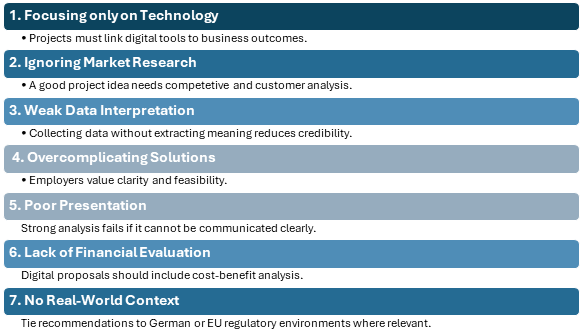
Common Mistakes Students Make in Digital Economy Projects
How the Impact of Digital Economy on Student Learning Shapes Careers
The impact of the digital economy on student learning goes beyond academic development; it’s shaping what graduates are capable of doing from day one in their careers.
Employers across consulting, technology, finance, and operations consistently say they want graduates who can work with data, manage digital tools, think strategically about technology, and communicate findings clearly.
In fact, according to 2025 Eurostat data, the European Commission is monitoring progress toward the 2030 goal that 75% of EU companies adopt advanced digital technologies (such as AI, cloud computing, or big data).
These experiences also build confidence. Students who’ve done this work tend to interview differently — they have specific examples, documented outcomes, and a clearer sense of where their strengths lie. That specificity is what converts good candidates into job offers.
Conclusion
The digital economy is not just limited to tech startups. It’s the context for most of the professional opportunities students will encounter over the next decade.
Getting comfortable with it — through well-chosen projects, developed digital economy skills, and honest reflection on where your gaps are — is one of the most useful things you can do before you graduate.
The students who will do well are the ones who pick something specific, go deep, and produce work they’re genuinely proud of. Start with one project. Make it real. That’s where careers are built.
Ready to develop the skills that employers in the digital economy are actively looking for? <Contact us to learn more> about BSBI’s programmes and how we can support your career ambitions.