
BSc (Hons) Computer Science
iN MADRID
GRADUATES HIRED BY GLOBAL LEADERS
We collaborate with numerous well-known companies to offer professional internships.

Academic Partner Of The University of Chichester
Enhance your qualifications through our partnership with the University of Chichester, one of the UK’s leading institutions with over 130 years of academic excellence..

Award-Winning Institution
Benefit from the standards of excellence our awards represent, reinforcing the quality and credibility of your learning experience.
KEY FACTS
LOCATIONS
Madrid
DURATION
3 years
FORMAT
On-campus
IN PARTNERSHIP WITH
University of Chichester
MODE OF STUDY
Full-time
LANGUAGE
English
INTAKES*
Coming Soon
* Intakes are subject to change
** see all pricing and fees in our fees page
PROGRAMME OVERVIEW
Professional roles in computing domains are growing significantly. So, there is an increased demand for employable and productive computer science graduates with strong practical skills
The BSc (Hons) Computer Science programme has been designed to provide students with a broad range of computer science skills, delivered in a way that will support future employability.
The programme has a special focus on computer systems, computer architectures and their design, and software and application development. From an employability perspective, the programme places strong emphasis on the design and development of IT architectures, systems, and applications. It also attempts to equip students with practical skills that are directly relevant to industry needs.
In addition, concentrating on computer systems as well as software and application development, the course provides students with a strong foundation for more professional roles

WHO IS THIS PROGRAMME FOR
The degree is aimed at students who want a technically focused Computer Science education with a clear line of sight to industry. It particularly suits those interested in software development, artificial intelligence, systems architecture, data and cyber-related roles.

WHAT WILL THE STUDENT EXPERIENCE
Students will experience:
Student-centric workshop-based learning – In place of traditional large group lectures, interactive workshop-based learning activities are central to programme delivery.
Small group workshops – Interactive and participative environment built around an executive development style model.
Practical, hands-on learning – Significant emphasis on practical work with real development tools and technologies.
Real-world projects – Projects undertaken for real-world business scenarios.
Supportive environment – Personal development within a supportive environment that enables students to master challenges and achieve goals.
Personal tutor system – Individual support through dedicated mentoring and personalised feedback.

WHAT YOU’LL GAIN FROM THIS PROGRAMME
By completing this programme, students will develop a robust blend of technical expertise, professional behaviours, and transferable skills that prepare them for modern computing careers and further study.
Technical knowledge and skills
- Solid grounding in core computer science concepts (including algorithms, data structures, formal foundations and computer architectures).
- Proficiency in procedural and object oriented programming styles. This includes designing, implementing, testing and debugging software solutions.
- Practical skills in designing, implementing and querying databases, and using data effectively in applications and services.
- Experience in building web and mobile applications, integrating frontend and backend technologies to create usable, reliable systems.
- Exposure to advanced topics such as artificial intelligence, data science and analytics, cyber physical systems, creative computing, cyber security and computational science (depending on module choices).
- Ability to specify, design and evaluate secure, reliable and usable computer based systems that address clearly defined user and organisational needs.
Analytical and problemsolving abilities
- Capacity to analyse complex technical and business problems, identify requirements and constraints, and propose appropriate computing solutions.
- Experience in working with abstract models and theoretical ideas, and applying them to real world scenarios.
- Skills in evaluating alternative designs, tools and technologies, making justified choices based on evidence, tradeoffs and risk.
Professional and project skills
- Experience of working on individual and group projects that mirror professional software and systems development practice.
- Project management capabilities, including planning, organising work, managing deadlines and coordinating with others.
- Ability to produce clear, structured technical documentation and reports, and to present technical material to different audiences.
Ethical, social and professional awareness
- Understanding of professional, ethical, legal and societal issues in computing, including security, privacy, sustainability and responsible use of technology.
- Appreciation of relevant codes of conduct and standards, and how these guide decision making in professional practice.
Personal and transferable skills
- Development of self‑direction and responsibility for one’s own learning, including reflection on progress and areas for improvement.
- Strong communication skills, both written and oral, in technical and non‑technical contexts.
- Ability to work effectively both independently and as part of a team, contributing to and leading collaborative work when appropriate.
- Adaptability and resilience in dealing with new tools, technologies and unfamiliar problem domains.
REASONS TO STUDY AT BSBI Spain
01
Strong technical curriculum that covers programming (procedural and object-oriented), algorithms and data structures, databases, web and mobile development, and computer systems and architectures.
02
Advanced specialist modules at honours level in areas such as artificial intelligence, data science and analytics, cyber-physical systems, cyber security, creative computing and computational science.
03
Emphasis on designing, implementing, testing and deploying reliable, secure and usable computer-based systems to address real-world problems.
04
Authentic, project-based, assessments that develop practical software engineering skills, problem-solving, and the ability to work with complex technical requirements and constraints.
05
Project-based teaching that enables intensive support, hands-on use of contemporary tools and technologies, and frequent technical feedback from experienced computing staff.
06
Focus on professional and ethical practice in computing, including security, sustainability, legal and societal considerations in the development and use of digital systems.
programme structure

foundation year

Foundations of Learning and Professional Skills for Engineering
Foundations of Engineering
Project

YEAR 1
Mathematics for Computer Science
Business Information Systems
Networked World; Systems & Architectures
Procedural Programming
Computer Science Fundamentals
Algorithms & Data Structures
Database Systems
Object-Oriented Programming

YEAR 2
Developing Real Systems for Customers (Group Projects A and B)
Project Management
Web Application Development
Mathematical Modelling & Numerical Analysis
Professional Practice / Graduate
Mobile Application Development
Design & Analysis of Algorithms

YEAR 3
Cyber-Physical Systems
Data Science & Analytics
Creative Computing
Artificial Intelligence
Computational Science
Cyber Security
Final Year Project
Commitment
to the European Higher Education Area (EHEA) and the Sustainable Development Goals (SDGs)
BSBI is committed to various Sustainable Development Goals through initiatives focused on poverty eradication, health and well-being, quality education, gender equality, reducing inequalities, clean water and sanitation, affordable and clean energy, industry innovation and responsible consumption.
- Commitment to Ending Poverty: BSBI empowers students to develop business plans for non-profits, supports initiatives like Back-to-School Africa and partners with organisations to offer scholarships and educational opportunities to disadvantaged youth.
- Health and Well-being Initiatives: BSBI offers wellness and mental health support through consultants, workshops and support groups, fostering a community that prioritises emotional and psychological well-being.
- Quality Education: BSBI is recognised for its academic excellence, interdisciplinary research and partnerships with external academic institutions, enhancing global educational standards.
- Promoting Gender Equality: BSBI cultivates an inclusive environment, by upholding anti-discrimination laws and supporting initiatives like the Women in Technology Scholarship to empower women in the tech industry.
- Reducing Inequalities: BSBI ensures fair treatment for all, providing necessary facilities and resources to guarantee equal access to education and employment opportunities.
- Water and Energy Efficiency: BSBI has renovated its main campus facilities to optimise water and energy usage, incorporating sustainable materials and systems to reduce environmental impact.
- Sustainable Construction and Waste Management: BSBI uses eco-friendly materials in renovations and implements efficient waste management systems to promote recycling and reduce waste generation.
- Promoting Sustainable Transport: BSBI encourages the use of public transport and provides bicycle parking to reduce the reliance on cars, supporting sustainable commuting alternatives.
BSBI is dedicated to enhancing the quality, equity and inclusivity in education, emphasising lifelong learning, mobility and sustainable development.
- Student Diversity and Inclusion: BSBI’s student body represents over 114 nationalities, with a gender distribution of 70% men and 30% women and an average age of 28 across its main programmes.
- Equitable Admission Process: BSBI ensures equal treatment in admissions, focusing on candidate suitability and providing necessary accommodations for disabled students.
- Commitment to Academic and Personal Development: BSBI’s teaching practices promote academic and personal growth, tailored to meeting the needs of its diverse student community.
- Future Educational Goals: BSBI aims to introduce new academic programmes and strengthen collaborations to positively impact the global community.
- Technological Advancements: BSBI is adopting new technologies and expanding its faculty and locations to enhance its educational offerings.
- Innovative Teaching Methods: BSBI combines in-person, remote and hybrid learning to overcome challenges like visa issues, ensuring uninterrupted academic progress.
- Research and Academic Initiatives: BSBI supports research through its Postdoctoral Research Centre and organises numerous academic events, including a TEDx on education in the metaverse.
- Sustainability and Ethical Education: BSBI integrates sustainability and ethical practices into its programmes, collaborating with global institutions like the Goa Institute of Management and offering professional certificates in corporate sustainability and ethics.
RECOGNITION OF CREDITS
BSBI may recognise prior academic learning or relevant professional experience for applicants to Professional Master’s programmes, where it is equivalent to the programme’s competences, learning outcomes and workload.
Credit recognition may be considered for:
- relevant professional experience linked to compulsory internship requirements;
- credits from other CUALIFICAM-certified Professional Master’s programmes;
- credits from official or institution-specific Master’s degrees, including recognised business schools and accredited postgraduate centres.
Recognised credits may not exceed 30% of the programme’s ECTS.
The Master’s Final Project cannot be recognised.
Applicants request recognition during admission and submit supporting evidence of previous studies or professional experience through the designated platform.
Each request is assessed by the Credit Recognition Committee. The Registrar’s Office then communicates the final decision to the applicant.
Credits are not awarded automatically. Recognition is granted only after individual assessment confirms that the evidence is relevant, sufficient and equivalent to programme requirements.
STUDENT PORTALS
To support your academic journey once you are enrolled, we provide access to platforms designed to keep you connected and organised.
Canvas is a comprehensive learning platform where students can access their modules, check their grades, and find educational materials. Additionally, through this platform, they can take exams and submit their assignments and academic work.
The MyPage Student Portal serves as the central access point for an overview of students’ academic information, class schedule, attendance records, submission of letter requests, and more.
ADMISSION REQUIREMENTS

Academic ProfilE
This route is for applicants who meet the academic requirements for direct entry into Year 1 of the Bachelor’s degree.
Applicants should normally hold one of the following qualifications:
- A school leaving certificate that provides access to higher education in Spain
- An international school leaving certificate equivalent to UK Level 3 (A Level standard), as assessed by UK ENIC
- BTEC National Diploma or Advanced Vocational Certificate of Education (AVCE), or an equivalent qualification

English Proficiency
Accepted English language qualifications include:
- IELTS: 6.0 overall with at least 5.5 in each component
- TOEFL iBT: 80 overall, with minimum component scores of Listening 17, Reading 18, Speaking 20 and Writing 17
- Pearson Test of English (PTE): 56 overall, with minimum 51 in each component
- Duolingo English Test: 105+
- Equivalent English qualifications may also be accepted, subject to review by BSBI Admissions.

Required Documents
What you’ll need to apply
As part of your application, we generally ask for:
- School leaving certificate and transcript
- Proof of English language proficiency
- Up-to-date CV
- Personal statement
- Academic or professional reference(s)
Please note that additional or alternative documents may be requested where applicable.
Career progression
As a BSBI student, you’ll also gain access to our Careers Service, which provides tailored guidance, industry networking opportunities, and connections with top global employers.

Graduates are well prepared for roles such as:
- Software developer or software engineer
- Applications and web developer
- Systems analyst or solutions architect
- Data or business intelligence analyst
- Artificial intelligence and machinelearning practitioner
- Cyber security analyst or security engineer
- Technical consultant or IT specialist in organisations relying on complex information systems
Programme aims
The programme aims to:
01
provide a coherent, broad based programme of study based on graduate employer’s requirements and effectively prepare students for the challenges of technology and the architectures and software that underpin many of the information systems used by organisations, all within the context of a changing external environment;
02
focus on the design, development and delivery stages of the system development process;
03
provide opportunities for students to gain experience and skills through internships and/or work placement;
04
develop self-aware, reflective students who take responsibility for their own learning and demonstrate a responsibility to fellow learners;
05
develop a range of cognitive, problem solving and practical skills that will enable graduates to add-value within the workplace
06
provide assessment and project-based tasks that allows students to apply knowledge and skills appropriately within an authentic context;
07
provide the educational foundation that is relevant to further study and life-long learning
08
create a learning environment where professional standards are expected, but at the same time recognises that learning is challenging and appropriate support is provided both by staff and fellow learners
learning outcomes
By the end of the programme students should be able to demonstrate the following:
System Design, Development and Deployment
The ability to specify, analyse, design, construct, test and deploy reliable, secure and usable computer-based systems to address specified problems.
Problem Analysis and Solution Design
The ability to critically evaluate and analyse complex problems with current and future requirements and devise appropriate computing solutions, within the constraints of time scale and budget.
Applied Computing Technologies
Effective use of computer systems and technologies to address real world problems in various domains
Theoretical Foundations of Computing
An understanding of underpinning computing and communications theories, technologies, and their applications.
Professional and Ethical Practice
An understanding of the professional, economic, social, environmental, moral and ethical issues involved in the sustainable exploitation of computer technology being guided by the adoption of appropriate professional, ethical and legal practices.
Critical Systems Evaluation
Critical evaluation of systems based on theories and principals
OUR NUMBERS SPEAK FOR THEMSELVES
Built from more than 2,800 student responses across BSBI campuses, the results reflect strong student satisfaction, support, and career-focused learning.
87%
overall student satisfaction
88%
feel BSBI provides a diverse and inclusive environment
90%+
satisfaction with career services
84%
would recommend BSBI
96%
satisfaction with enrolment support
400+
students secured jobs or internships in 2025
Our campuses
Study in two of Europe’s most dynamic business hubs.
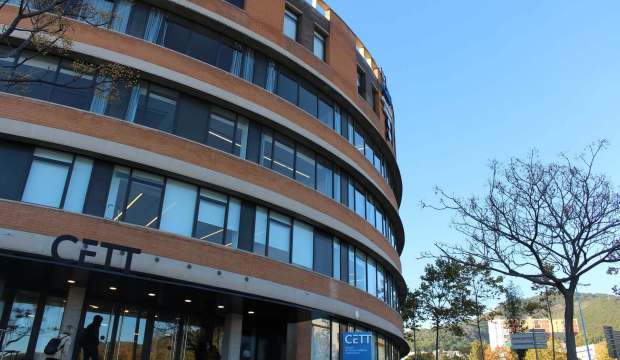
BSBI Barcelona Campus
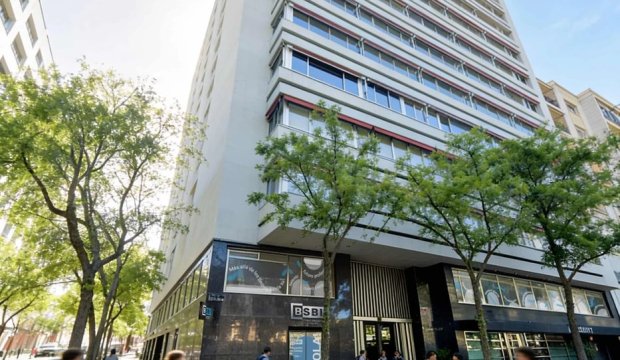
BSBI Madrid Campus
how to apply
Application Process
Apply to BSBI Spain programmes easily: check requirements, submit documents online, and track your application step by step.
Entry Requirements
Discover the entry pathways for this programme, designed for different academic and professional backgrounds. Choose the route that best fits your qualifications and career goals.
Fees, Funding & Insurance
Understanding the costs associated with your programme is an important part of planning your studies.
Important Dates
Check out the upcoming important dates for Madrid and Barcelona — stay informed and don’t miss out!
Next steps

Apply for your enrolment today and secure your place at BSBI.

Speak with an expert and plan your academic future at BSBI.

Explore programs and get answers at our Virtual Open Days.
VISIT BSBI MADRID
(in person)
102 Paseo de la Castellana, 28046 Madrid.
VISIT BSBI Barcelona
(IN PERSON)
C/ Berruguete 46-48, 08035 Barcelona.
Student voices
Discover what international students have to say about their first days at BSBI!
TESTIMONIALS

"I’ve had a great experience. The networking events have been incredibly valuable, and I’ve learned so much throughout the program. Joining this master’s program completely broadened my perspective on what I wanted to do in the future, and now I feel like I have many more opportunities available to me.
I truly value the chance I’ve had to study abroad. Stepping outside my comfort zone has helped me grow both professionally and personally. If you have the opportunity to pursue a master’s degree abroad, I highly encourage you to take it."⭐⭐⭐⭐⭐

"Since I arrived in Barcelona, it has been an incredible experience. Living here has allowed me to learn so much, especially by being exposed to new perspectives and ideas from people around the world. I’ve met amazing individuals with unique backgrounds and inspiring stories, and those connections have enriched both my personal and professional journey.
My goal is to build a career in the healthcare sector, focusing on the administrative side. Throughout this experience, I’ve strengthened my leadership skills, and I’m excited to continue growing professionally while having the opportunity to travel and discover new places along the way."⭐⭐⭐⭐⭐

Frequently asked questions
Everything you need to know about the program,
admissions, and student life in Spain.
Students also gain practical experience in web and mobile application development, while exploring emerging fields such as artificial intelligence, data science, cybersecurity, and analytics. The programme is designed to combine theoretical knowledge with hands-on learning to prepare graduates for industry-focused careers.
The programme also provides a strong academic foundation for postgraduate study in computer science, software engineering, AI, cybersecurity, and related technology disciplines.
Students develop professional skills such as project management, teamwork, technical communication, and problem-solving while working on industry-relevant scenarios. This approach helps bridge the gap between academic study and professional employment in the technology sector.
Key benefits include practical learning, small-group workshops, exposure to advanced technologies, industry-relevant projects, personalised academic support, and the development of both technical and professional competencies. Graduates leave with the skills needed to design, develop, test, and deploy secure and reliable computing solutions for modern organisations.
Memberships
Explore our renowned partners and allies.
BSBI MEDIA COVERAGE
Academic partners
Discover the variety of academic partners that BSBI works with: